

Пекоріно
Pecorino
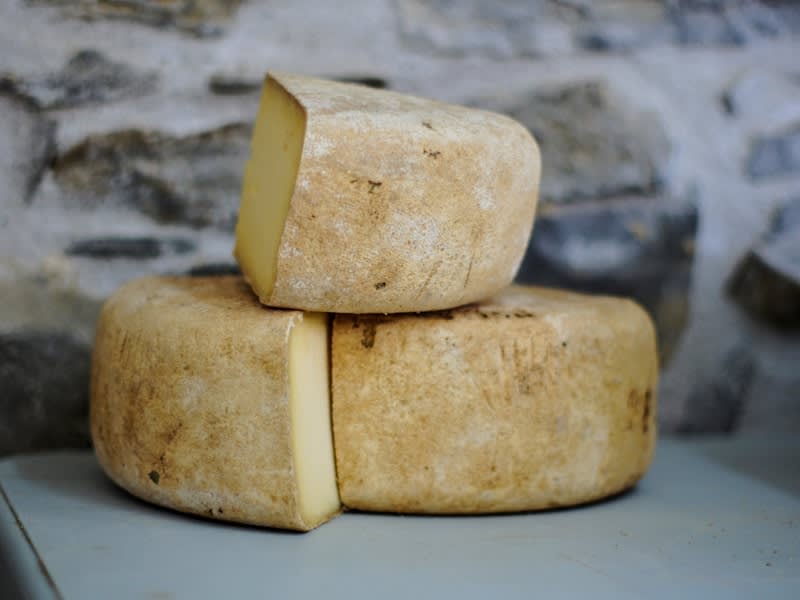
Pecorino is an Italian hard sheep's-milk cheese, salty and piquant; a classic for pasta such as cacio e pepe.
Pecorino is a general name for traditional Italian hard cheeses which, unlike parmesan, are made exclusively from sheep's milk (from the Italian pecora — “sheep”). It is one of the most ancient cheeses of Italy, known since the times of Ancient Rome.
The most famous variety is Pecorino Romano, a hard, salty and sharp cheese that originated in Lazio (today made mostly in Sardinia; PDO area: Sardinia, Lazio and the province of Grosseto). There are also softer and younger kinds, such as Tuscan pecorino. The aged cheese has a dense, granular, crumbly texture and a rich, salty, sharp-piquant taste, more expressive and “sheepy” than parmesan. Pecorino Romano is an indispensable component of several iconic Roman pasta dishes: cacio e pepe, amatriciana, carbonara. It is grated over dishes or served in pieces. Aromatic, distinctive, and ancient, pecorino is an important part of the rich Italian cheesemaking tradition.